If'n yinz ever wanted to see all Donnie Iris's music videos, here they are, plus a bonus n'at.
Showing posts with label Musical Archaeology. Show all posts
Showing posts with label Musical Archaeology. Show all posts
Tuesday, August 24, 2021
Thursday, December 12, 2019
Sunday, May 22, 2016
I Am A Scientist, I Seek To Understand Me, All Of My Impurities And Evils Yet Unknown
GBV! GBV! GBV! Dayton, OH's own indie and lo-fi rock demigods Guided By Voices have racked up quite an impressive tally of albums thanks to lead singer Robert Pollard's inability not to write songs; and the two albums that put them on the map in a big way were the '94 Bee Thousand and '95 Alien Lanes. I really don't think they had any finer documents of their sound besides these two albums - at least until the vaunted original lineup reunited in 2011.


One year later, GBV found themselves in a contract with Matador Records for the follow-up to Bee Thousand. With the lineup consisting primarily of Pollard, Sprout, and Fennel, and partially of Demos, Mitchell, Toohey, Jim Pollard, Larry Keller, Gary Phillips and (future rock critic) Jim Greer, the band (such as it was!) delivered Alien Lanes, a more consistent record with a little bit more to chew on - both in length and depth of ideas. Greer would report in his GBV biography that the advance Matador gave the band was close to the six-figure mark, while the cost to actually record Alien Lanes was about ten bucks (beer doesn't count).So how does $99,990 worth of PBR sound What do I think of it? Read on! For reference, this is the Matador 20th anniversary release, and I suspect it may now be out of print.
What I Liked:
Still utilizing the same weatherbeaten sound, GBV puts out a record with more consistency, and Robert Pollard brings his songwriting to a more mature and complex level with this album - as far as iI know, none of these recordings are rescued from ten-year-old tapes; Alien Lanes was the first major GBV album to be recorded in one go. And I mean that literally - most of GBV's tracks are first or second takes. One of the advantages of this approach is that earnest undercurrent that much of their best material possesses. Moving from Bee Thousand to Alien Lanes, the boys bring out a blend of harder rock and far more jangly power pop that's unmistakable. It's probably best exemplified by 'Motor Away', the hard-rocking super-upbeat linchpin of the album; immediately preceding is 'Auditorium', which presents a nice lead-in and the change between the two is delightful mood whiplash. 'Blimps Go 90', 'Closer You Are', 'A Good Flying Bird' and probably 'Little Whirl' are some of the most pleasant pop gems I've ever heard - perhaps a bit fluffy, but decidedly nice. The epic 'King And Caroline' and loomingly martial 'Striped White Jets' provide some depth and danger. Meanwhile, 'Game Of Pricks' and 'My Valuable Hunting Knife' hits some of the relatability and vulnerability of 'I Am A Scientist' on the last disc. Pollard begins to assemble a real collection of mature and insightful lyrics. Opener 'A Salty Salute' and closing quasi-instrumental 'Alright' make nice bookends for the experience with very similar sounds (and the former being a legit tribute to the drunks of the world!). It's certainly the equal of Bee Thousand, and taking the two together is probably the best introduction to GBV possible.
What I Didn't Like:
'They're Not Witches' and "Chicken Blows' don't sound finished (always a danger with GBV) and 'The Ugly Vision' (how apt) sounds too slow for this disc. And the two real shorties, 'Hit' and 'Gold Hick' are both rather bizarre, even thought they're listenable. Oh, and whoever slept through 'Ex-Supermodel' should drink more coffee.
In Conclusion:
A second fantastic album from the Dayton boys and a most worthy follow-up to Bee Thousand. If you're going to listen to one, there's no reason not to hear the other. What more can I say about Alien Lanes that I haven't already said about Bee Thousand?

This is where it began for so many music fans and for me as well. Bee Thousand got the band noticed, by an order of magnitude greater than the previous albums Propeller (1991) and Vampire On Titus (1993) had. The lineup isn't quite represented in a solidified form, as some of the tracks are home recordings made years earlier. Really, the group largely worked like a collective before this album, with informal meets to rock out in various members' basements and garages; whoever showed up to play got a chance. The usual suspects are all here: Robert Pollard on vocals and some guitar; Tobin Sprout on vocals, guitar, bass guitar, and piano; Mitch Mitchell on guitar; Greg Demos on bass guitar; and Kevin Fennel on drums. Others, who came and went on the early recordings are Robert's brother Jim Pollard, and also Dan Toohey on bass guitar; Don Thrasher on drums, and Randy Campbell on backing vocals. Funny thing - this album almost didn't get made since Pollard considered breaking up the band after Propeller's middling success; and the disc had several proposed track listings which variously included about 30 additional tracks that largely didn't see the light of day until the 10th anniversary 'Director's Cut' version of the album. The version I own is the recent Scat Records re-pressing of the original track listing, in a very nice gatefold. So how should I try to explain one of the greatest indie rock albums of all time to my readers? Dunno, but I'll attempt to anyway!
What I Liked:
First of all, you have to understand what the lo-fi aesthetic means to certain people. For those making records this way, often it means that the record gets made at all. Others have found that the sound has a certain, unique character. One of the early GBV records (Sandbox, I think) was in fact done clean and polished in a proper studio, and Pollard found the sound far too sterile for his tastes. By comparison, Bee Thousand has a sort of earthy, pleasantly janky honesty to it's weird echoes, unavoidable bits of feedback and distortion, and occasional glitches (e.g. the guitar dropping out on 'Hardcore UFOs'). But all by itself, this vintage home-movie aesthetic wouldn't be enough to lift this record to the prominent position it holds in my collection. Robert Pollard has such a knack for penning wildly out-there lyrics that seem to be an enigma yet to be comprehended or layers to be peeled away (as opposed to a Dylan-esque word salad). He doubles down by pairing that with truly fine power pop (often like The Who or possibly The Rolling Stones; but with a fair amount of post-British Invasion garage and psychedelia blended in) melodies and killer power riffs - e.g. 'Hardcore UFOs', 'Gold Star For Robot Boy'. This is balanced with Tobin Sprout's contributions of more gentle, intimate acoustic-driven tracks with hints of Lennon/McCartney-esque lyrics ('Awful Bliss', Ester's Day). While it's a very garage-rock sounding record, in the end it's the emotional resonance that makes this record work. It's a difficult mood to describe, but the feeling of a complete flight of fancy takes root in a lot of the tracks. It's somehow a very daydreamy, or uplifting record at times! Some of the tracks paint vivid pictures ('Peep-Hole', 'Hot Freaks') while others just beg to be given a meaning or be deciphered (the majority, but especially 'Tractor Rape Chain' and 'The Goldheart Mountaintop Queen Directory'). Even so, king on this record is possibly Pollard's greatest achievement, 'I Am A Scientist'. With echoey guitars, a riff that exudes memorability and coolness, and a delightfully enigmatic set of lyrics that I've always felt to be the definitive statement on the complexity of the human condition. A glowing description, I know; but seriously, just listen to it already and tell me I'm not on to something. When so much of this album is so intriguing and nothing short of a treat for the ears, singling out best songs seems rather unnecessary.
What I Didn't Like:
There's so little, but in a few spots, anarchy seems a bit dominant; see 'A Big Fan Of The Pigpen', 'Her Psychology Today', and the slide whistle (or something) that disrupts 'Demons Are Real'. Besides that, things that would detract from the sound for almost any other band manage to add to the charm of this disc, as I described above. It's very counterintuitive.
In Conclusion:
Look, it's high on lists of great albums for a reason. The title of this post uses lyrics from 'I Am A Scientist' because I couldn't think of anything more fitting. It's a fantastic listen, and unless you end up with more than one GBV album in your possession, you'll never hear anything like it. Everyone, and I mean everyone, should hear this once.

One year later, GBV found themselves in a contract with Matador Records for the follow-up to Bee Thousand. With the lineup consisting primarily of Pollard, Sprout, and Fennel, and partially of Demos, Mitchell, Toohey, Jim Pollard, Larry Keller, Gary Phillips and (future rock critic) Jim Greer, the band (such as it was!) delivered Alien Lanes, a more consistent record with a little bit more to chew on - both in length and depth of ideas. Greer would report in his GBV biography that the advance Matador gave the band was close to the six-figure mark, while the cost to actually record Alien Lanes was about ten bucks (beer doesn't count).
What I Liked:
Still utilizing the same weatherbeaten sound, GBV puts out a record with more consistency, and Robert Pollard brings his songwriting to a more mature and complex level with this album - as far as iI know, none of these recordings are rescued from ten-year-old tapes; Alien Lanes was the first major GBV album to be recorded in one go. And I mean that literally - most of GBV's tracks are first or second takes. One of the advantages of this approach is that earnest undercurrent that much of their best material possesses. Moving from Bee Thousand to Alien Lanes, the boys bring out a blend of harder rock and far more jangly power pop that's unmistakable. It's probably best exemplified by 'Motor Away', the hard-rocking super-upbeat linchpin of the album; immediately preceding is 'Auditorium', which presents a nice lead-in and the change between the two is delightful mood whiplash. 'Blimps Go 90', 'Closer You Are', 'A Good Flying Bird' and probably 'Little Whirl' are some of the most pleasant pop gems I've ever heard - perhaps a bit fluffy, but decidedly nice. The epic 'King And Caroline' and loomingly martial 'Striped White Jets' provide some depth and danger. Meanwhile, 'Game Of Pricks' and 'My Valuable Hunting Knife' hits some of the relatability and vulnerability of 'I Am A Scientist' on the last disc. Pollard begins to assemble a real collection of mature and insightful lyrics. Opener 'A Salty Salute' and closing quasi-instrumental 'Alright' make nice bookends for the experience with very similar sounds (and the former being a legit tribute to the drunks of the world!). It's certainly the equal of Bee Thousand, and taking the two together is probably the best introduction to GBV possible.
What I Didn't Like:
'They're Not Witches' and "Chicken Blows' don't sound finished (always a danger with GBV) and 'The Ugly Vision' (how apt) sounds too slow for this disc. And the two real shorties, 'Hit' and 'Gold Hick' are both rather bizarre, even thought they're listenable. Oh, and whoever slept through 'Ex-Supermodel' should drink more coffee.
In Conclusion:
A second fantastic album from the Dayton boys and a most worthy follow-up to Bee Thousand. If you're going to listen to one, there's no reason not to hear the other. What more can I say about Alien Lanes that I haven't already said about Bee Thousand?
Monday, November 30, 2015
Thursday, August 6, 2015
Saturday, November 23, 2013
Don't Hesitate To Give Us a Call
It's actually somewhat notable that Neil Young has recorded on only one record label for almost his entire career - Reprise. What I only just learned is that the label was created by Frank Sinatra and later sold to Warner Brothers. In 1976 almost all of the artists signed to Reprise were transferred to Warner's main label except Sinatra, who would effectively have Reprise as his own vanity label.
Oh, and also Neil Young, who simply would not leave. He is rumored to have protested the phase-out decision until apparently giving in after 1981's Re*Ac*Tor. Signing with Geffen Records, where he was promised artistic freedom, Neil embarked on what is often regarded as the most bewildering and out-of-character phase of his career. Electronica, rockabilly, straight-up country, and even New Wave got a workout at Neil's hands - and David Geffen would not be pleased, suing Neil in 1983 for making 'unrepresentative music'. Well, whatever, Dave. You don't know what you had in 80's Neil, and we're going to examine two of those gems - Trans and Landing On Water.


Oh, and also Neil Young, who simply would not leave. He is rumored to have protested the phase-out decision until apparently giving in after 1981's Re*Ac*Tor. Signing with Geffen Records, where he was promised artistic freedom, Neil embarked on what is often regarded as the most bewildering and out-of-character phase of his career. Electronica, rockabilly, straight-up country, and even New Wave got a workout at Neil's hands - and David Geffen would not be pleased, suing Neil in 1983 for making 'unrepresentative music'. Well, whatever, Dave. You don't know what you had in 80's Neil, and we're going to examine two of those gems - Trans and Landing On Water.
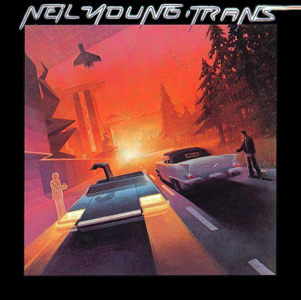
So in 1982 Neil started work on a new album for Geffen. Originally, the album was to be a Crazy Horse backed effort with a hard rock sound, but Neil made major alterations to the album with synths and a vocoder. As a result, the album took on a bizarre, nigh-upon-robotic sound. Personnel included all the Crazy Horse regulars - Billy Talbot, Ralph Molina and Frank Sampedro; as well as Neil buds Nils Lofgren and Ben Keith, and session men Joe Lala and Bruce Palmer.
What I Liked:
Well, I can't really get too enthused or descriptive about the instrumental performances; it's all masked by a digital filter, really. But even so, it's very nicely melodic. Neil can still write a tune, even when he's pushing buttons on a machine. The vocal timing is good, and it alone could make the album; and even with the vocoders, Neil's typically plaintive delivery still calls to my ear, especially on the heartbreaking 'Transformer Man' and the thickly-veiled-digi-lust of 'Sample And Hold'. Best yet, the almost-unintelligible lyrics, if your ear is keen enough to pick them out, often deal with communication, especially the vain efforts to communicate with those that can't receive the message. And here, incidentally is the core of Trans and the reason that 'Transformer Man' is such a tearjerker: Trans was Neil's attempt to express his frustration and all the time and energy and soul spent trying to communicate with his son, Ben; who is handicapped due to severe cerebral palsy. Neil, despite using the seeming coldness of of electronic instruments, captures an amazing range of emotion; other themes he touches on are, presciently, cybercrime; the explosion of technology at the time (which enabled him to make the album!); and, in a sense, nostalgia reimagined, if you consider the cover of 'Mr. Soul'. Of the handful of non-electronic songs on the album, 'Like an Inca' is the best, being a surprisingly interesting counterpoint to the powerful display of technology that the core of the album represents; instead it idealizes the ancient kingdoms of South America. The main villain, however, is The Bomb, rather than the internet. Best songs? Everything except the first track on each side.
What I Didn't Like:
Bizarrely, Neil includes three songs from an aborted album inspired by Hawaii. These are the outliers, and despite bookending the electronic strangeness, they sound far more out of place here than Trans itself does in Neil's catalog. 'A Little Thing Called Love' and 'Hold On To Your Love' - despite being well-executed, they sound empty and somewhat vapid, for Neil material. 'Like An Inca' is good enough to escape this problem, but goes on longer than necessary. And the key takeaway about the album's failings is that you need to know the story in order to fully appreciate it. That's not a failure of the music itself; even Neil had trouble getting the full message across, in a sadly ironic turn of events.
In Conclusion:
A surprisingly classic album, despite it's oddities, with a genuine story behind it and solid songwriting to boot. Neil diehards should give this one a second look, if they haven't yet, and anyone who likes electronic music should check out this as a footnote, if nothing else.
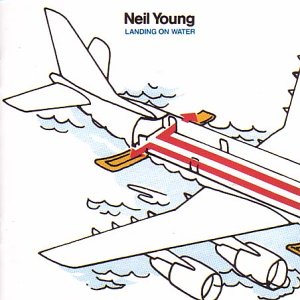
In 1986, Neil released an album that began with a failed Crazy Horse session in 1984 and was completed by Neil as a solo album. Fully embracing New Wave, Neil made a disc almost as bewildering as Trans, and this would be his next-to-last release for Geffen.
What I Liked:
It's less robotic than Trans...or not. The performances are all fairly cookie-cutter, but well-done. It's extremely polished, and it's not really suffering from that approach. On a couple tracks there's a choir providing some backing vocals, and Neil sounds pretty good both singing and playing. The songs are generally well-written, and tuneful; Neil can't keep his own feelings from leaking onto a record either, despite how much a product of its time Landing On Water might sound like. I like how Neil can still bring a hard rock crunch to some of the songs, despite the New Wave backdrop. He handles pop well enough while he's at it. Best songs have to be 'Weight Of The World', where Neil distills New Wave to its essence; 'Bad News Beat'; 'Touch The Night', and it's TV news aesthetic (and music video); 'Hard Luck Stories'; and 'Pressure'.
What I Didn't Like:
Probably the general sterility of the album. It's not a complete failing, but it doesn't let Neil break out and pull all the stops; he's kind of restrained. It's like he's holding himself back. (Perhaps a wise move, since Freedom and Ragged Glory came out in '89 and '93 respectively?) Some of the songs get a bit pointlessly sugary, like 'Violent Side' (!) and 'Hard Luck Stories', while others have an overly analyzed feel to them, almost autistic or blindly accepting. In general, the shorter (and comparatively more spontaneous) the song, the better, I'd say: case in point, 'Drifter', the album's mediocre closer, seems to drag, and does, at 5:05, the longest on the album. Last but not least is the only thing that could have truly broken the album for me, and that would be Neil's voice; but in this instance it's this particular context in which it appears. He's not the ideal New Wave lead singer.
In Conclusion:
I'd recommend this to fans of Ric Ocasek's solo career; as Neil takes the same approach on this disc. Neil diehards should at least hear this once; casual fans should wait. If you need 80's music for something, it would be hard to place this album as anything but a product thereof.
Saturday, December 15, 2012
There Was A Band, They Were Sickening, Arousing Everyone
The above video is for the song 'Shocker In Gloomtown' by the Breeders. But the video is bizarre in that all these guys are peeking through the windows as they play. I just thought it was a weird video until I realized that the dude looking in the window at 54 seconds is Robert Pollard of Guided By Voices. Looking closer, you can tell that the whole group of peeping creepers is actually the classic GBV lineup. 'Shocker In Gloomtown' was originally a GBV song, and apparently the boys from Dayton wanted to see how they were doing.
Also, why are the Deal sisters each short about five guitar strings?
Tuesday, August 14, 2012
Snortin' Whiskey And Drinkin' Cocaine
Dave Edmunds - I Hear You Knockin'
Bob Welch - Ebony Eyes
British artist Dave Edmunds is best remembered today as a 70's rocker very interested in 50's rock and roll and blues. His main claim to fame is his solo single 'I Hear You Knockin', a cover of a Smiley Lewis blues tune. After a chain of production credits for notable pub-rock artists Brinsley Schwarz and Ducks Deluxe, Edmunds subsequently formed the band Rockpile (commonly credited as 'Dave Edmunds and Rockpile) with Nick Lowe in 1976.
Up - Just Like An Aborigine
After the departure of the MC5 from the Ann Arbor, Michigan commune of John Sinclair, the protopunk band Up became the frontspiece for Sinclair's White Panther Party and its radical politics. With a stripped-down, hard-edged and aggressive sound, the band went unnoticed as the like-minded MC5 and Stooges were signed to Elektra and Up was not. Frustratingly, Up was the opening act at a show double-billed to the Stooges and the MC5, which was the performance that convinced Elektra to sign the two pioneering punk bands. The band split in 1973.
Bob Welch - Ebony Eyes
Bob Welch first rose to fame as rhythm guitarist for Fleetwood Mac for four albums during the years 1970-1975. Upon leaving after difficult tours and legal struggles, he turned to a solo career, releasing 'Ebony Eyes' in 1977 along with its album, French Kiss. Later solo albums in the 80's met with decreasing success, and sadly, in June of 2012 Welch committed suicide after an ineffectual back surgery.
Pat Travers Band - Snortin' Whiskey
Another Canadian, Pat Travers caught the attention of fellow Canuck and rockabilly artist Ronnie Hawkins, who invited him to play with Hawkins' outfit. After an appearance on German television by an early incarnation of Travers' own group, the band released one each studio and live albums, and opened for Rush on their A Farewell To Kings tour. In 1980, Crash And Burn debuted and the single 'Snortin' Whiskey' made the band a notable name in the hard rock scene of the very early 80's.
In 1981, Travers' group disbanded and Travers dived into new projects which found only minor successes. However, since then Travers and a new lineup for the Pat Travers Band have toured briefly in the 90's and more extensively in the 2000's.
Henry Paul Band - Grey Ghost
Henry Paul formed the Siennas in 1971, and shortly thereafter the Siennas turned into The Outlaws. Paul left the band in 1977 and formed his own Henry Paul Band. The Henry Paul Band disbanded in 1983, and Paul returned to The Outlaws for three more years before forming the band BlackHawk. Paul still plays with the Outlaws on more recent tours.
I remember thinking that this was The Outlaws when the song would play on Channel 97 as a kid. So did my dad, but when I looked it up and figured it out, Dad had the little lightbulb come on, remembering that Henry Paul was one of The Outlaws' guitarists.
Red Rider - Lunatic Fringe
Canadian hard rock band Red Rider formed in 1978, and released their first album in 1980. Their second release, As Far As Siam, spawned the AOR hit single 'Lunatic Fringe'. In 1989, rhythm guitarist Tom Cochrane began to see success from his solo career, and as a consequence, Red Rider broke up. Since 2002, Cochrane has reunited with some of his old bandmates to tour as Tom Cochrane And Red Rider.
Sniff 'n' The Tears
British band Sniff 'N' The Tears released 'Driver's Seat' in 1978, after five years of touring and searching for a record deal. The song was a minor hit, and remained an AOR staple for years in England and the US. After three more albums, the group split, but reformed in 1992 and has released a couple of albums since.
Tuesday, August 7, 2012
Can You Live This Fantasy Life?
As of late I've been searching for some lost classic rock songs I remember from my youth, and some of them I have found. Enough of this stuff, and some more recent discoveries, are in the pipeline that I will need two posts to get it all in. Part one as follows:
One of the main sound features of the record was rumored to be three Mellotrons, which the band apparently had available, but three of the pioneering keyboards never appear together on any of the tracks. After the breakup, drummer Pick Withers would go on to play with Dire Straits for the first four albums.
Aldo Nova - Fantasy
First up is Canadian rocker Aldo Nova, with the modest hit single 'Fantasy'. Interesting way of breaking that door down in the video. The song comes from Aldo Nova's self-titled debut album, released in 1980. The band would not see success bigger than that which accompanied this song.
I remember hearing 'Fantasy' on Channel 97, WRRK Braddock-Pittsburgh, when I was a kid. Early in their existence (which was also early in my existence) Channel 97 was the modern rock station, but by the time I really got into new music they had become a classic rock station with a massive library on account of getting all the new releases. Once a year, later in their existence, they would haul out this entire friggin' library of about 7,000 songs, if i remember correctly, and play the whole thing in alphabetical order. It damn near took them a month to do it, but it was epic. Most of the stuff in this list is either from the A To Z Playback, or got airplay on Channel 97 at some point.
I remember hearing 'Fantasy' on Channel 97, WRRK Braddock-Pittsburgh, when I was a kid. Early in their existence (which was also early in my existence) Channel 97 was the modern rock station, but by the time I really got into new music they had become a classic rock station with a massive library on account of getting all the new releases. Once a year, later in their existence, they would haul out this entire friggin' library of about 7,000 songs, if i remember correctly, and play the whole thing in alphabetical order. It damn near took them a month to do it, but it was epic. Most of the stuff in this list is either from the A To Z Playback, or got airplay on Channel 97 at some point.
The Hooters - And We Danced
Another Channel 97 memory, 'And We Danced' ended up in the early stages of an A To Z after Donnie Iris. Nervous Night was the album that gave us this gem, and Hooters, who hail from Philadelphia, had a long career, if mostly under the radar domestically, or more popularly in Europe.
Coney Hatch - Monkey Bars
If you ever wanted to know what Van Halen would be like if they were from Canada, this band, Coney Hatch, comes very close. Of Toronto, Ontario, and named for a mental asylum in nearby London, this hard rock quartet issued three albums over their career, with most attention going to this song, 'Monkey Bars'.
I actually put in a request to Channel 97 for this song once, while I was under the impression that the band's name (or solo artist as it sounded) was Cody Hatch. Eh, I was ten or so.
Gamma - Thunder And Lightning
Previously discussed on this blog, Gamma was a late '70s AOR hard rock band fronted by the prolific, if largely under the radar, Ronnie Montrose. I did not get a sleeve with my copy; it came free from a local record store, disc only. That is one whacked-out piece of cover art. Whacked. Out.
John Cafferty & The Beaver Brown Band - On The Dark Side
John Cafferty & The Beaver Brown Band could have easily been mistaken for Bruce and the E Street Band by those not familiar with either. Somehow, in creating the music for the movie Eddie & The Cruisers, Cafferty wrote and, along with his band, performed with a Boss-like sound - for a movie set in 1963. 'On The Dark Side' hit number one after the release of the movie in 1983, but that was as far as the group would go, despite getting a track on the Rocky IV soundtrack.
Spring - Hendre Mews
In 1971, an early progressive rock band released a single album, which did little, and broke up before completing a second effort. This was the band called Spring, who came to the attention of producer Kingsley Ward, owner of Rockfield Studios, when their van broke down in the village of Rockfield.
One of the main sound features of the record was rumored to be three Mellotrons, which the band apparently had available, but three of the pioneering keyboards never appear together on any of the tracks. After the breakup, drummer Pick Withers would go on to play with Dire Straits for the first four albums.
UFO - Too Hot To Handle
UFO were a British hard rock and heavy metal band that found better fame in Germany and Japan than their native Britain or the US. The 1977 album Lights Out contributes the gem 'Too Hot To Handle' to our roundup today. Lineup on this track has Phil Mogg on vocals, Paul Raymond on keyboards, Pete Way on bass, Andy Parker on drums, and Michael Schenker on lead guitar. Schenker, being the younger brother of Scorpions guitarist Rudolf Schenker and himself a brief member of the Scorpions early on, would leave for a solo career with his own group in 1980.
Neil Young (Stray Gators) - L.A.
So why did I include Neil Young on a list of favorite obscure rockers? The reason is that the album in question is obscure in Neil's catalog. Time Fades Away was recorded live over the course of a '73 tour Neil did that turned into a disaster. Neil broke up Crazy Horse after the heroin overdose death of guitarist Danny Whitten; formed a new band made up of session musicians not all of whom had even been on the road before or worked with Neil; sprung brand new, dark, semi-autobiographical songs on his unsuspecting audiences; and recorded the whole affair with a severely problematic digital mixer that bypassed the typical 2-track master tape stage.
The whole album's 16-track configuration would have to be reassembled with extreme difficulty in order to remaster it for reissue; however, copies on vinyl and a preview of a cancelled HDCD issue are both circulating. That said, it's likely that TFA will not be officially re-released because of how disastrous the tour was and how many bad memories Neil still has of the experience.
Subscribe to:
Posts (Atom)